Kongtul Tsephel Rinpoche
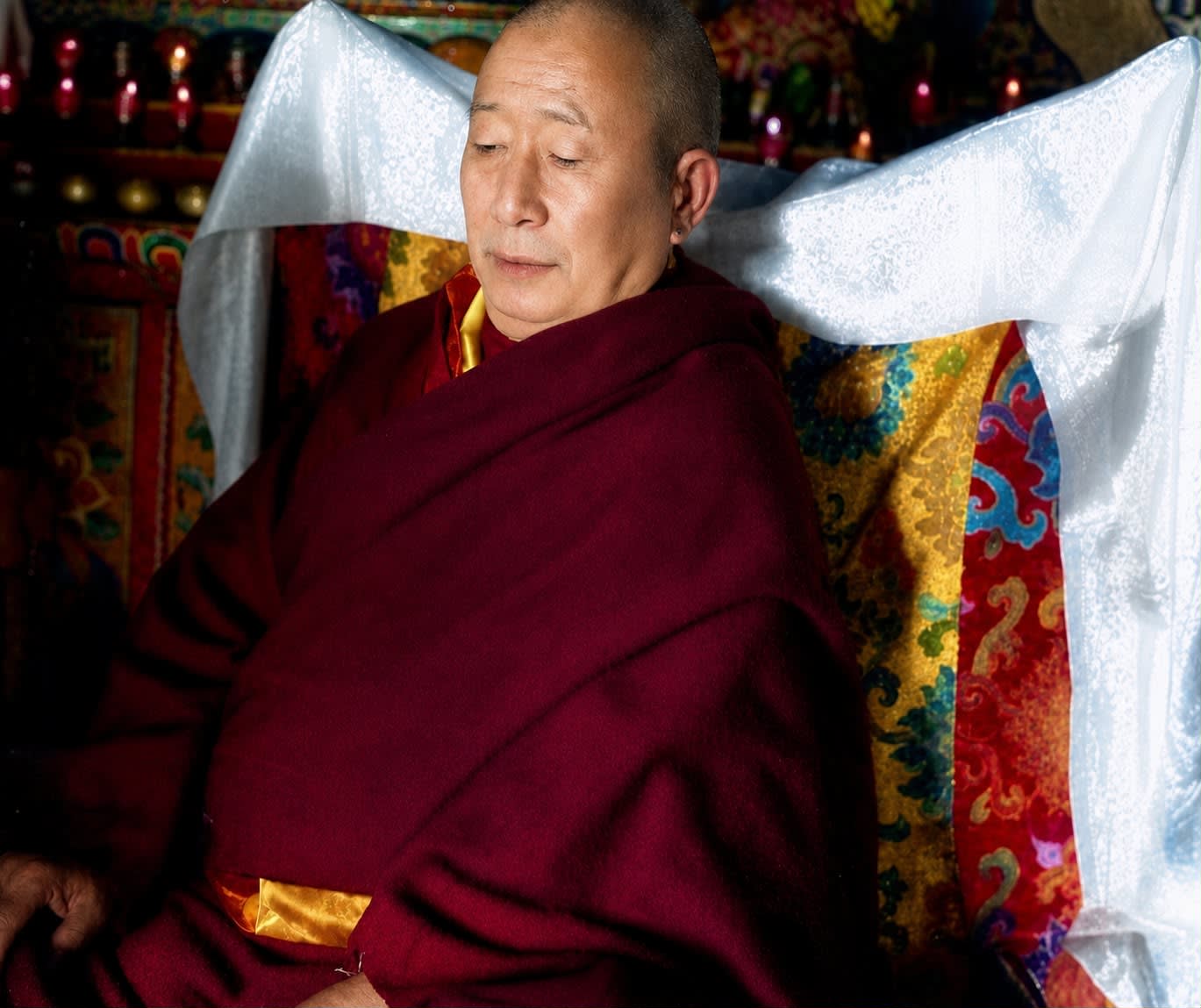
Tulku Tsephel was born in 1926 at Kongpo Bhuchu Dechenten, Tibet, amid numerous wonderful signs. His father was Yab Chöphel and his mother was Mayum Sangye. Tulku Tsephel was recognized as a reincarnation of Tulku Rangbar Rinpoche by the 10th Mindrolling Trirab, Gyurne Dondrup Wangyal. From the age of five, Tulku began to study history and grammar as well as reading and writing with Tulku Jigmey Chöying Norbu at the Rigdzin Gyaling Cave Monastery in lower Kongpo. From the age of fourteen he studied at Mindrolling Monastery, where he completed his studies in the Nyingmapa tradition.
After Tulku Tsephel completed his studies, he returned to Kongpo where, due to the fruition of his previous karma and prayer, his parents first met their root guru, Kyabje Dudjom Rinpoche. They offered their son into the care of His Holiness. Since Tulku Tsephel was a Mindrolling monk, the offer had to be endorsed by Minling Chung Rinpoche, who supported it joyfully, as did Kyabje Dudjom Rinpoche. Tulku served Kyabje Rinpoche for twelve years, travelling with him wherever he went. Thus, he received extensive empowerments, transmissions, and teachings. Tulku completed three Ngöndro sets at the recommendation of Kyabje Rinpoche. During his third Ngöndro, Tulku experienced various signs, after which Kyabje Rinpoche said that the Ngöndro was successful and that it was completed.
Due to the deteriorating political situation in Tibet, Tulku Tsephel was separated from his root guru. But Tulku was reunited with Kyabje Dudjom Rinpoche after Tulku fled Tibet and arrived in India. Once again, he was able to serve Kyabje Rinpoche. Kyabje Rinpoche asked Tulku Tsephel to go to Odisha and settle there. From that time until he passed away, Tulku stayed in Odisha in order to serve the Dundul Raptenling Monastery. He was appointed the 5th president of the monastery in about 1975. Tulku Tsephel was especially known for his knowledge and accuracy in astronomy and divinations. His prayers and blessings were known as effective and beneficial.
In 1997, Tulku Tsephel hosted and consulted with His Holiness Shenphen Dawa Rinpoche in order to establish the first shedra (monastic educational program) at Dundul Raptenling. The shedra began with twenty-two monks, but eventually most of them left the monastery. At the suggestion of Tulku Tsephel, Lama Sonam Tashi recruited fifteen new monks in 2008.
At about that time, Tulku Tsephel’s health began to fail. Tenshyuk (long-life prayers) were offered by the local Tibetan communities of Kongpo Kyiduk tsokpa, Yephel tsogpa, Pekö tsokpa and the Camp #3 residents, as well as Dundul Raptenling and one of the Namkha Khyung Dzong monasteries located near Dundul Raptenling in Odisha. Tulku regained his health nicely and lived for another three years. During those years, Tulku shared all his thoughts and hopes for the monastery with Lama Sonam Tashi, who had been serving Tulku for a long time. Three months before his passing, Tulku said that he would not be “staying” long. On the fifth day of the Tibetan New Year (March 5, 2010), Tulku passed away, but remained in tukdam (meditative equipoise) for five days. During those five days, there was a very light rain—a very auspicious sign called charpa metok in Tibetan (or rain flower). From the first night of Tulku Tsephel’s passing until his cremation, residents of the area heard the continual chanting voices of dakinis. Tulku’s cremation was performed on the 10th day of Losar attended by lamas, monks and lay people alike. After the cremation, ringsel (relics) were collected, along with a rainbow-colored bone which can still be seen today. Peköd Tulku Gyalsey Rinpoche suggested prayers for the swift reincarnation of Tulku Tsephel, which Dundul Raptenling Monastery sincerely followed and performed.